Home composting is an easy, cost‑effective way for residents to reduce waste and create a valuable resource for gardens and landscaping. Providing clear composting information on the Town website also supports Williamstown’s compliance with the Massachusetts Solid Waste Master Plan and helps the Town earn Recycling Dividend Program (RDP) points.
Why Compost at Home?
Composting is the natural process of breaking down organic materials into a nutrient‑rich soil amendment. Studies show that up to 25% of household trash is compostable, meaning a significant portion of what we throw away can be diverted from disposal.
Common compostable materials include:
- Fruit and vegetable scraps
- Bread, pasta, and grains
- Coffee grounds and tea bags
- Eggshells
- Shredded paper and paper products
By composting at home, Williamstown residents help reduce trash, lower disposal costs, and support the Town’s environmental sustainability goals.
Williamstown’s Home Compost Bin Program
Williamstown supports home composting through the availability of backyard compost bins, commonly known as Earth Machines.
These bins are designed to:
- Retain heat and moisture for faster composting
- Keep animals out
- Provide a tidy, contained composting system
Under typical conditions, organic material in a compost bin can begin turning into usable compost within 3–6 months.
What Makes Good Compost?
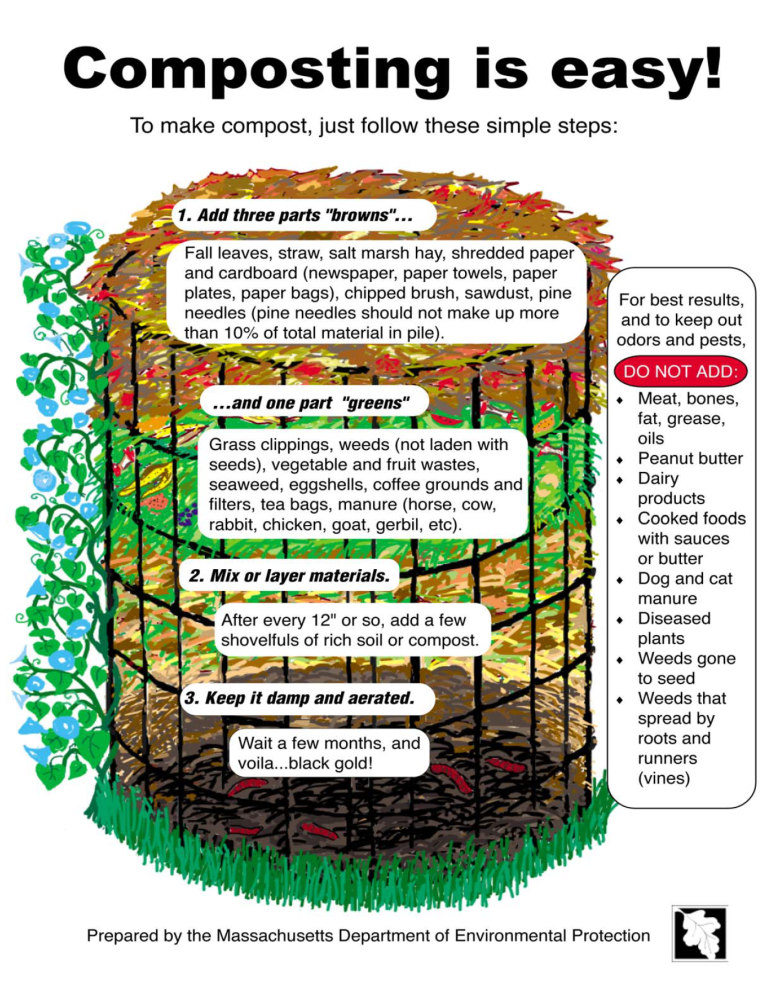
Successful composting depends on the right balance of materials. A good rule of thumb is:
- Three parts “brown” (carbon‑rich) materials
- One part “green” (nitrogen‑rich) materials
This balance feeds composting organisms and helps prevent odors.
Brown Materials
- Dry leaves
- Straw
- Dried grass clippings
- Wood chips or sawdust
- Pine needles
- Shredded newspaper and paper bags
Green Materials
- Fruit and vegetable scraps
- Coffee grounds and tea bags
- Fresh grass clippings
- Weeds
- Eggshells
Materials should be lightly damp (like a wrung‑out sponge). As you build your pile, add a few shovels of garden soil or finished compost every 12 inches to introduce helpful microorganisms.
The Importance of Leaves
Leaves are one of the most important ingredients in composting. Without enough dry, carbon‑rich material, compost piles can become too wet and odorous.
Tips for success:
- Start your compost pile with a layer of leaves
- Save extra leaves to add during warmer months
- Always bury food scraps under about 6 inches of leaves
If leaves are limited, shredded paper towels, napkins, and torn paper bags can be used as substitutes.
Air and Maintenance
Most composting work is done by soil organisms that require oxygen. Without enough air, decomposition slows and odors develop.
To maintain healthy compost:
- Use a bin that allows airflow
- Periodically turn or loosen the material
- Avoid compacting the pile
Turning the pile or fluffing materials helps keep compost aerobic and odor‑free.
When is Compost Ready?
Compost typically begins forming within a few months. Material at the bottom of the bin breaks down first.
Finished compost:
- Is dark brown and crumbly
- Smells like rich soil
- No longer resembles the original materials
How to Use Finished Compost
Finished compost can be used throughout your yard and garden:
- Add a handful to planting holes for seedlings and transplants
- Spread as mulch around plants (keep compost away from stems)
- Mix ½–3 inches into garden beds before planting
- Refresh lawns with screened compost spread about ¼ inch deep
- Create potting soil by mixing equal parts compost, sand, and loam
Supporting Williamstown’s RDP Goals
Providing composting education and promoting home composting bins helps Williamstown meet Recycling Dividend Program (RDP) requirements. These efforts:
- Demonstrate waste reduction and education outreach
- Support compliance with state recycling standards
- Help the Town remain eligible for RDP grant funding
Residents play a key role in this success by composting at home and staying informed about local disposal and recycling programs.