Treasurer’s Office Opening Late on Tuesday, November 10
The Treasurer/Collector’s Office will be open only 2:00 to 4:30 PM on Tuesday, November 10, 2026. All offices will be closed for Veterans Day on Wednesday, November 11.

In Person Early Voting - General Election 11/3
October 29, 2026 9:00 am - 4:00 pm | 31 North St, Williamstown, MA 01267, USA | See more details
In Person Early Voting - General Election 11/3
October 30, 2026 9:00 am - 4:00 pm | 31 North St, Williamstown, MA 01267, USA | See more details
Trick or Treat
October 31, 2026 5:00 pm - 7:00 pm | | See more details
General Election
November 3, 2026 7:00 am - 8:00 pm | Williamstown Elementary School Gymnasium, 115 Church St, Williamstown, MA 01267, USA | See more details
Finance Committee
November 4, 2026 7:00 pm - 9:00 pm | Hybrid Meeting - Community Meeting Room, 31 North Street, Williamstown, MA 01267 & Zoom | See more details
Berkshire County Retirement Advisory Board
November 5, 2026 9:00 am - 10:00 am | Hybrid (29 Dunham Mall, Pittsfield, MA and virtually) | See more details
Board of Registrars
November 9, 2026 9:30 am - 11:00 am | Community Meeting Room, 31 North Street, Williamstown, MA 01267 | See more details
Select Board
November 9, 2026 7:00 pm - 9:00 pm | Hybrid Meeting (In Person at 31 North Street, Williamstown and Zoom Participation) & Streaming Live on Willinet.org & Broadcast Live on Spectrum TV Channel 1303 | See more details
Milne Public Library Trustees
November 10, 2026 5:30 pm - 6:30 pm | 1095 Main St, Williamstown, MA 01267, USA | See more details
Planning Board
November 10, 2026 7:00 pm - 9:00 pm | Hybrid Meeting (In person at 31 North St. & Zoom Participation) & Streaming Live willinet.org & Spectrum TV Channel 1303 | See more details
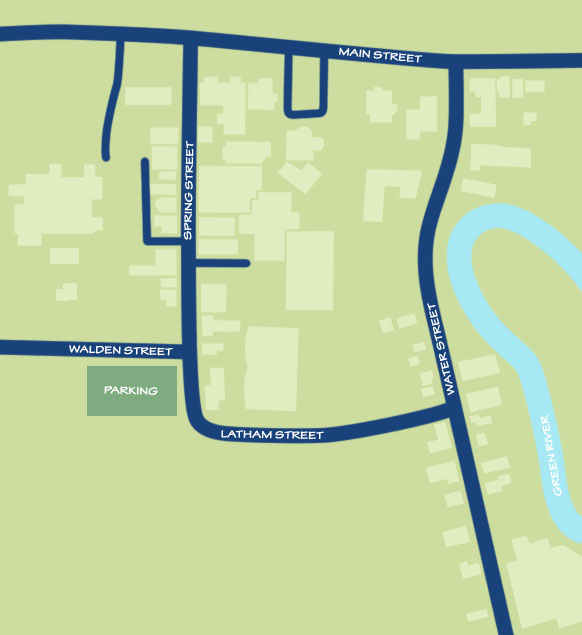
Town Hall is located at:
31 North St.
Williamstown, MA 01267
The Treasurer/Collector’s Office has two main jobs. As Treasurer, the office manages the Town’s money. It deposits, invests, and pays out Town funds, handles banking and bank reconciliations, borrows money when the Town needs it, and supports payroll. The Treasurer also handles tax titles, the legal process that begins when property taxes go unpaid and can lead to foreclosure. As Collector, the office sends bills and collects payments for real estate taxes, motor vehicle excise taxes, water and sewer charges, transfer station fees, and parking tickets.
Staff also help residents, property owners, and businesses with questions about bills, payments, and accounts. All of this work follows Massachusetts law. The office’s goal is to give excellent service, protect public funds, and keep the Town on solid financial ground.
Williamstown bills Real Estate and Personal Property taxes twice a year, on a semi-annual schedule. Each bill covers half of the current fiscal year, which runs from July 1 through June 30 of the following year.
For example, the bill mailed October 1, 2027 is due November 1, 2027. It covers July 1 through December 31, 2027, the first half of Fiscal Year 2028.
If a due date falls on a weekend or holiday, payment is due the next business day.
Paying through your mortgage? Many homeowners have their property taxes escrowed, which means their mortgage lender pays the bill for them. If you’re not sure whether your taxes are paid this way, check with your bank or mortgage servicer.
If you own and register a motor vehicle or trailer in Massachusetts, you owe motor vehicle excise tax when you first register it and every year after that for as long as it stays registered. After your first bill, excise bills are sent once a year, usually in February.
The Registry of Motor Vehicles (RMV) notifies the Town when residents register a vehicle, and the Town prepares the bill. Excise tax is billed by calendar year. That’s different from property taxes, which are billed twice a year on the fiscal year schedule.
Excise tax is paid to the town where your vehicle is garaged, so it stays in Williamstown to support local services.
You can pay these bills by mail, at the drop box, in person, or online:
By Mail
Make checks payable to the Town of Williamstown and mail to:
Tax Collector
31 North Street
Williamstown, MA 01267
Secure Drop Box
Leave your payment in the secure drop box in front of Town Hall at any time, before, during, or after business hours. Staff check it Monday through Friday.
In Person
Visit the Treasurer/Collector’s Office on the second floor of Town Hall during public hours. The office accepts cash, checks, money orders, and credit cards. A processing fee applies to credit card payments.
Online
Pay anytime through the Pay Bills page:
Processing fees are paid by the person making the payment. By law, the Town can’t use municipal funds to cover credit card fees.
Questions About Your Bill?
Treasurer/Collector’s Office staff are glad to help. Give the office a call or send your question through the department’s email form below.
Mailed payments are counted as paid on the day they arrive at the Treasurer/Collector’s Office, not the postmark date. To avoid interest charges, mail payments early enough to arrive by the due date.
Real Estate and Personal Property Taxes — referred to generally as “property taxes” — are an “ad valorem” tax, which means they are based on the value of a property rather than the ability of the property owner to pay. Property taxes are collected to pay the town’s expenses. Money raised from property taxes is referred to as the Tax Levy, which residents vote on each May at Town Meeting.
Property tax bills are mailed twice a year, in October and April.
Property taxes are based on the Town’s fiscal year, which runs from July 1 to June 30. The October bill covers the first half of the year and the April bill covers the second half. For example, for Fiscal Year 2027, the October 2026 bill covers July 1 to December 31, 2026, and the April 2027 bill covers January 1 to June 30, 2027.
Bills are due November 1 and May 1. If a due date falls on a weekend or holiday, payment is due the next business day. Late payments are charged interest at an annual rate of 14%.
In Massachusetts, the tax rate is expressed in dollars per thousand of assessed value. An example using fiscal 2026 figures and the calculation is as follows: (Tax Levy of $21,883,996 ÷ Taxable Assessed Value of $1,541,126,509) x 1000 = Tax Rate of $14.20 per $1,000 of assessed value. The tax levy is approved by voters at the annual Town Meeting while the taxable assessed value is established by the Assessors Office.
Learn more about property assessments at the Assessors page.
Yes, you will be charged 14% interest the day after the due date.
See the Secretary of the Commonwealth’s information about motor vehicle excise.
Massachusetts levies an excise on each vehicle at the rate of $25 per $1,000 of valuation. The $25.00 rate is the same in all 352 towns and cities in Massachusetts. It does not change like the property tax rate.
By law, assessors can levy excises based only on the manufacturer’s list price and the age of the motor vehicle. Assessors can’t levy excises based on present market value, price paid, or vehicle condition.
Excise is based on a percentage of the manufacturer’s list price, which goes down as the vehicle ages:
The taxable value is not based on what you paid for the vehicle, the Blue Book value, or its condition. It is based on a percentage of the manufacturer’s list price.
Yes, in most cases. You may apply for an abatement at the Assessor’s Office. If a refund is due you will receive it in the following month of abatement. Refunds are done once a month.
Using this form will send a message to the designated department contact.
The Treasurer/Collector’s Office will be open only 2:00 to 4:30 PM on Tuesday, November 10, 2026. All offices will be closed for Veterans Day on Wednesday, November 11.
See what’s in the latest issue of your municipal newsletter!
When your bill for the first half of fiscal year 2027 arrives around October 1, you’ll notice an increase. Here’s why, and where that money goes.
The Treasurer/Collector’s Office will be closed Tuesday, August 11, through Thursday, August 13, while staff attends a conference and training.
31 North Street, Second Floor
Williamstown, MA 01267
Mon-Fri, 8:30am-4:30pm