
Arm’s-Length Sale – A transfer of property ownership between a willing seller not under compulsion to sell and a willing buyer not under compulsion to buy. The sale price is the amount of money, or its equivalent, that probably would be arrived at through fair negotiations taking into consideration the uses to which the property may be put and allowing a reasonable time for exposure to the market.
Assessed Valuation – A value assigned to real estate or other property by a government as the basis for levying taxes. In Massachusetts, assessed valuation is based on the property’s full and fair cash value as set by the Assessors. (See Full and Fair Cash Value)
Assessment Date – The date property tax liability is fixed. In Massachusetts, property taxes are assessed as of January 1 prior to the fiscal year. Assessors determine the physical status of taxable real and personal property, its ownership, fair cash value, and usage classification as of that date. By local option (MGL c. 59, § 2A), the physical status of real property on June 30 is deemed to be its condition on the previous January 1.
Assessment Sale Ratio (ASR) – A property’s assessed value divided by its sales price. The ASR expresses the relationship between the assessed value of a sold property and its most recent sales price, and it is instrumental in the certification of municipal property values completed by BLA every five years.
Bureau of Local Assessment (BLA) – The bureau within the Division of Local Services charged to regulate, oversee, and provide technical assistance to municipalities in the areas of real and personal property valuation and classification. As a primary responsibility, BLA reviews and recertifies each municipality’s property values once every five years to ensure they are at full and fair market value.
Classification of Real Property – The process by which assessors designate each parcel of real property in the community based on its use. All real property must be classified into one of four classes: residential, open space, commercial, and industrial.
Computer-Assisted Mass Appraisal (CAMA) System – An automated system for maintaining property data, valuing property, and ensuring tax equity through uniform valuations.
Cost Approach – A method used to estimate the present market value of an existing property by calculating the current cost to rebuild it, then adjusting the cost downward for depreciation based on the property’s actual age. Land is valued separately and added to the depreciated replacement cost.
Cyclical Inspection Program – A multiyear program implemented by local assessors to ensure that every property in the community receives a data inspection that complies with BLA’s certification standards over a time period not to exceed 10 years. To accomplish this efficiently, as a matter of good practice, the assessors should make plans to complete inspections of 10 percent of the community’s total parcels each year.
Data Collection – The process of inspecting real and personal property and recording its attributes, quality, and condition.
Equalized Valuation (EQV) – An estimate of the full and fair cash value of all property in the state as of a certain taxable date. Under MGL c. 58, § 10C, the Commissioner of Revenue is charged with the responsibility of biennially determining an equalized valuation for each city and town in the state. Relative EQVs have historically been used as a variable in distributing some state aid accounts and in determining county assessments and other costs.
Excess Levy Capacity – The difference between the levy limit and the amount of real and personal property taxes that a community actually levies in a given year. Annually, a municipality must report an acknowledgment by the select board or city council of the calculated excess levy capacity before DLS may set a tax rate.
Exemption – A discharge, established by statute, from the obligation to pay all or a portion of a property tax or motor vehicle excise. The exemption is available to categories of property or persons upon the timely submission and approval of an application to the assessors. Properties exempt from taxation include hospitals, schools, houses of worship, and cultural institutions. Persons who may qualify for exemptions include disabled veterans, blind individuals, surviving spouses, and seniors.
Fiscal Year (FY) – The 12-month period used for budgeting, accounting, and tax reporting purposes. The Commonwealth and municipalities operate on a fiscal year that begins July 1 and ends June 30, while the federal government’s fiscal year starts October 1 and ends September 30. In each case, the designation of a particular fiscal year (e.g., FY2025) derives from the calendar year in which it ends.
Five-year Certification – A compliance standard that requires local assessors to submit the community’s property values to BLA every five years for its review and certification that they represent full and fair cash values. Refer to MGL c. 40, § 56 and c. 59, § 2A(c). (See Revaluation and Interim-year Valuation Adjustment)
Full and Fair Cash Value – As defined by the Massachusetts Supreme Judicial Court, this is the “fair market value, which is the price an owner willing but not under compulsion to sell ought to receive from one willing but not under compulsion to buy. It means the highest price that a normal purchaser not under peculiar compulsion will pay at the time and cannot exceed the sum that the owner after reasonable effort could obtain for his property. A valuation limited to what the property is worth to the purchaser is not market value. The fair cash value is the value the property would have on January 1 of any taxable year in the hands of any owner, including the present owner.” (Boston Gas Co. v. Assessors of Boston, 334 Mass. 549, 566 (1956))
Full Measure and List – A data collection procedure completed by assessors to ensure a property record is kept up to date. An assessor measures the exterior(s) of the structure(s) on a parcel of property and relists the parcel information in the assessors’ records with any changes in condition since the last inspection. To comply with BLA’s certification standards, at least once every 10 years, assessors should complete a full measure and list for every property in the community and also inspect the interior of each property or demonstrate a determined effort to do so. (See Cyclical Inspection Program)
Interim-year Valuation Adjustment – An analysis, and associated report, completed by a local assessing department in four out of every five years to ensure that assessed values reflect year-to-year changes in market values. At five-year intervals, BLA reviews and certifies that the properties in an individual community have been assessed at full and fair cash (or “market”) value. In the years between these BLA revaluations, the community must review market conditions and property value trends and report any consequent valuation adjustments to BLA. (See Five-year Certification)
Land Schedule – A table developed and used by assessors to arrive at consistent assessed values for land within defined neighborhoods.
Levy – The amount a community raises through the property tax. The levy can be any amount up to the levy limit, which is reestablished every year in accordance with Proposition 2½ provisions.
Levy Ceiling – The levy ceiling is one of two types of levy (tax) restrictions imposed by Proposition 2½ (MGL c. 59, § 21C), the other being the levy limit. In any year, the real and personal property taxes imposed by a city or town may not exceed 2½ percent of the total full and fair cash value of all its taxable property, and this calculated amount is the levy ceiling. Property taxes levied may exceed the levy ceiling only if the community passes a capital exclusion, debt exclusion, or special exclusion.
Levy Limit – One of two types of levy (tax) restrictions imposed by Proposition 2½ (MGL c. 59, § 21C), the other being the levy ceiling, this is the maximum amount of real and personal property taxes a city or town may levy in a given year. The levy limit increases each year by 2½ percent, plus new growth and any voter-approved exclusions or overrides. The levy limit can exceed the levy ceiling only if the community passes a capital expenditure exclusion, debt exclusion, or special exclusion.
Motor Vehicle Excise – A locally imposed annual tax assessed to owners of motor vehicles registered to addresses within the community (MGL c. 60A). The excise rate is set by statute at $25.00 per $1,000 of vehicle value.
New Growth – The additional dollar increase in a community’s property tax levy limit, over and above the annual increase of 2.5%, that is generated by new construction, renovations and other increases in the property tax base during a calendar year but not including value increases caused by normal market forces or revaluations.
Overlay (Overlay Reserve, or Allowance for Abatements and Exemptions) – An account that is funded to provide an offset for anticipated property tax abatements and exemptions.
Override – A vote by a community at an election to permanently increase the levy limit. An override vote may increase the levy limit no higher than the levy ceiling. The override question on the election ballot must state a purpose for the override and the dollar amount.
Payment in Lieu of Taxes (PILOT) – An agreement between a municipality and an entity not subject to taxation, such as a charitable or educational organization, whereby the organization agrees to make a voluntary payment to the municipality. By law, a city or town must make such payment to any other community in which it owns land used for public purposes.
Personal Property – A movable item not permanently affixed to, or part of, a real estate parcel. It is assessed separately from real estate to certain businesses, public utilities, and owners of homes that are not their primary residences.
Proposition 2½ – The state law (MGL c. 59, § 21C) that regulates local property tax administration and limits the amount of revenue a municipality may raise from local property taxes each year to fund its operations.
Real Property – Land, buildings, and the rights and benefits inherent in owning them.
Revaluation – A comprehensive program completed by assessors at five-year intervals to ensure the community’s property valuation is appropriately adjusted to accurately reflect up-to-date market conditions. The revaluation program corresponds with the five-year certification of values by BLA. The assessors of each community are responsible for developing a reasonable and realistic program to achieve the fair cash valuation of property in accordance with constitutional and statutory requirements. The nature and extent of that program depend on the assessors’ analyses and consideration of many factors, including, but not limited to, the status of the existing valuation system, results of an in-depth sales ratio study, and accuracy of existing property record information. Every five years, assessors must submit property values to DLS for certification. Assessors must also maintain fair cash values in the years between certifications so that every taxpayer in the community pays their share of the cost of local government in proportion to the value of property they own. (See Five-year Certification and Interim-year Valuation Adjustment)
Supplemental Tax Assessments on New Construction – A provision under MGL c. 59, § 2D that allows a community to make pro rata assessments on the value of improvements that are greater than 50 percent of the billed value, excluding the land value, when an occupancy permit is issued after January 1. This provision allows a community to issue a bill (back to the date of occupancy between January 1 – June 30) for the current fiscal year on qualifying property improvements, resulting in additional general revenue. These improvements would be included in the subsequent year’s new growth calculation.
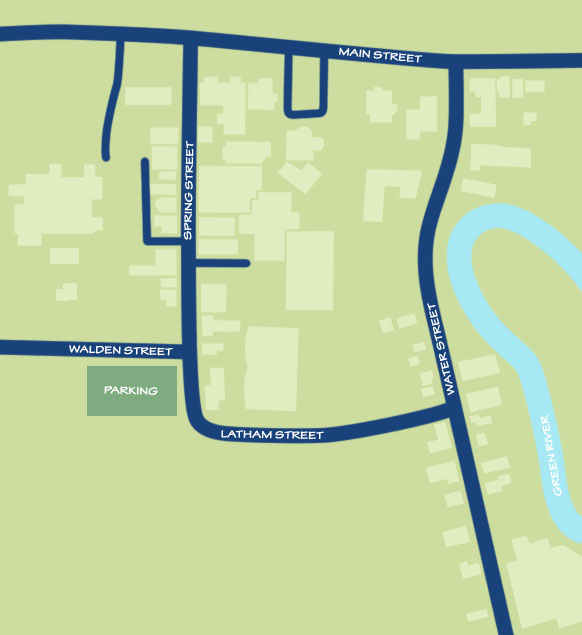
Tax Map – A map or series of maps used by assessors to determine the location of properties, indicate the size and shape of each parcel, and show their relation to features that affect value. Tax maps also provide a complete inventory of all land parcels and thus help to minimize the problems of omitted parcels and duplicate listings. Also referred to as assessors’ maps.
Tax Rate – The amount of property tax stated in terms of a unit of the municipal tax base, such as $14.80 per $1,000 of assessed valuation of taxable real and personal property.
Tax Rate Recapitulation (Tax Recap) – A multipart online form that a city or town submits to DLS to set a property tax rate. The tax recap shows all the estimated revenues and actual appropriations that affect the property tax rate. It should be submitted to DLS by September 1 (in order to issue the first-half semiannual property tax bills before October 1) or by December 1 (to issue actual tax bills on or before December 31 in a quarterly community or a semiannual community issuing annual preliminary tax bills).
Underride – A vote by a community to permanently decrease the tax levy limit. It is the exact opposite of an override.
Valuation – The legal requirement that a community’s assessed value on property must reflect its market, or full and fair, cash value.
Warrant – An authorization for an action. For example, a town meeting warrant establishes matters that may be acted on by that town meeting. A treasury warrant authorizes the treasurer to pay specific bills. The assessors’ warrant authorizes the tax collector to collect taxes in the amounts and from the persons listed.